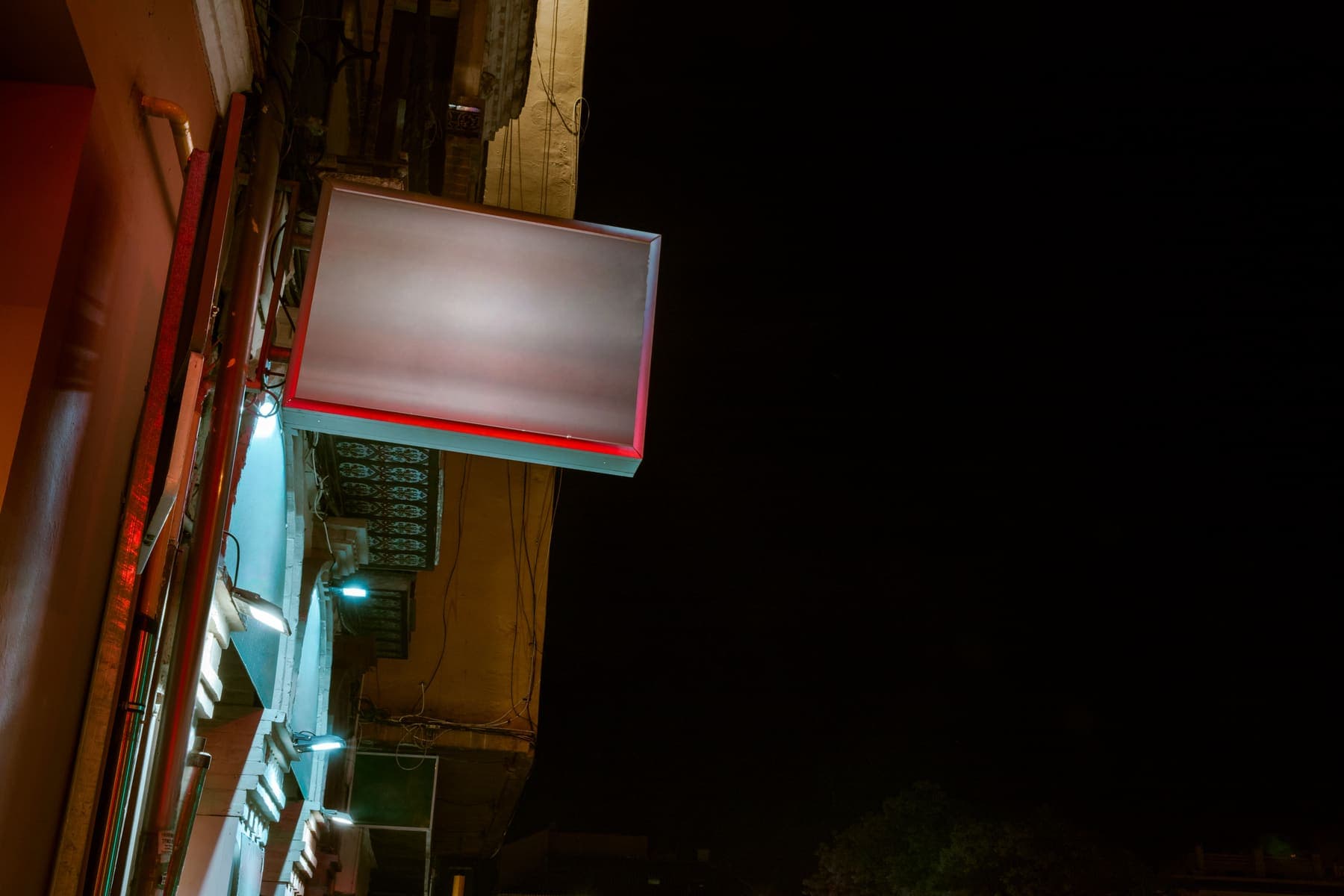
A French permit process and a German brightness limit are not the same problem. Seven recurring topics, with what they mean on site.
In cross-border signage the most expensive mistake happens in permitting, not production. A finished sign that gets refused doubles both the schedule and the budget.
1. Façade work is usually a separate application. A sign permit and a façade painting permit are different files.
2. Brightness limits are defined separately for night. Residential zones may require dimming or switch-off after a set hour.
3. Projection distance — how far a sign may extend from the façade — is capped for pedestrian safety.
4. In heritage districts illuminated boxes are usually refused, while halo lighting is accepted.
5. Electrical connections require certified components to the local standard; insurers ask for it.
6. In leased units, landlord consent is part of most applications.
7. Removal obligation: when a business closes, taking the sign down is normally the tenant's duty.
Clarify these seven at the start and the production schedule becomes realistic. We ask them at quotation stage — and if the answer isn't known yet, finding out is part of the job.